



The 2026 Toyota C-HR Returns as a Seriously Quick Electric SUV
Remember the old Toyota C-HR? That quirky little SUV with the wild styling but painfully slow acceleration? Toyota just threw out everything that held it back and created something completely different. The all-electric 2026 Toyota C-HR trades its sluggish gas engine for dual electric motors that rocket it to 60 mph in about five seconds. That’s faster than most sports sedans and leaves the original model eating dust at every stoplight.
- The 2026 C-HR packs 338 horsepower from dual electric motors, hitting 60 mph in roughly 5 seconds compared to the gas model’s painful 11-second sprint.
- Buyers get an estimated 290 miles of range from the 74.7 kWh battery, with DC fast charging that can go from 10% to 80% in about 30 minutes.
- Expected pricing sits between $38,000 and $45,000, putting it up against the Hyundai Kona Electric, Kia Niro EV, and Chevrolet Equinox EV when it arrives in Fall 2026.
Quick Reference Chart
| Powertrain & Performance | |
|---|---|
| Motors | Dual electric (front & rear) |
| Total Output | 338 horsepower |
| Drivetrain | Standard AWD |
| 0-60 mph | ~5.0 seconds |
| Battery | 74.7 kWh lithium-ion |
| Estimated Range | 290 miles |
| Charging Capabilities | |
| Charge Port | NACS (Tesla Supercharger compatible) |
| DC Fast Charge | 10-80% in ~30 minutes |
| AC Charging | Up to 11 kW |
| Features | Plug & Charge, battery preconditioning |
| Interior & Technology | |
| Seating | 5 passengers |
| Cargo Space | 25.4 cubic feet (rear seats up) |
| Touchscreen | 14 inches |
| Audio | 6-speaker standard, 9-speaker JBL optional |
| Standard Features | Wireless Apple CarPlay/Android Auto, dual wireless chargers, heated front seats, heated steering wheel, digital instrument cluster |
| Safety & Driver Assistance | |
| Suite | Toyota Safety Sense 3.0 |
| Standard Features | Automatic emergency braking with pedestrian detection, adaptive cruise control, lane keeping assist, blind spot monitoring, rear cross-traffic alert, traffic sign recognition, automatic high beams |
| Dimensions & Design | |
| Wheels | 18-inch standard, 20-inch available |
| Design Theme | “Hammerhead” front styling |
| Roof | Available panoramic moonroof |
| Notable Features | Hidden rear door handles, full-width rear light bar |
| Pricing & Availability | |
| Trims | SE (base), XSE (premium) |
| Estimated Price | $38,000-$45,000 |
| Release | Fall 2026 |
What Makes This C-HR Different From Before
Back in 2018, the first-generation C-HR showed up with aggressive styling that turned heads, but the driving experience didn’t match the looks. That old four-cylinder engine took over 11 seconds to reach 60 mph, making highway merging a white-knuckle experience. Cabin noise was brutal, and visibility felt like peering through a tank’s gunport. Toyota basically said, “Let’s fix all of that,” and started from scratch.
This new electric version keeps the bold design language but makes it work better. Up front, you get Toyota’s latest “Hammerhead” styling, which honestly looks way better than those oversized grilles from a few years back. Sharp body lines run down the sides, and there’s still that coupe-like roofline that made the original stand out. Out back, a full-width light bar looks properly modern. Those hidden rear door handles are back too, which some people love, and others find annoying when trying to let passengers in.
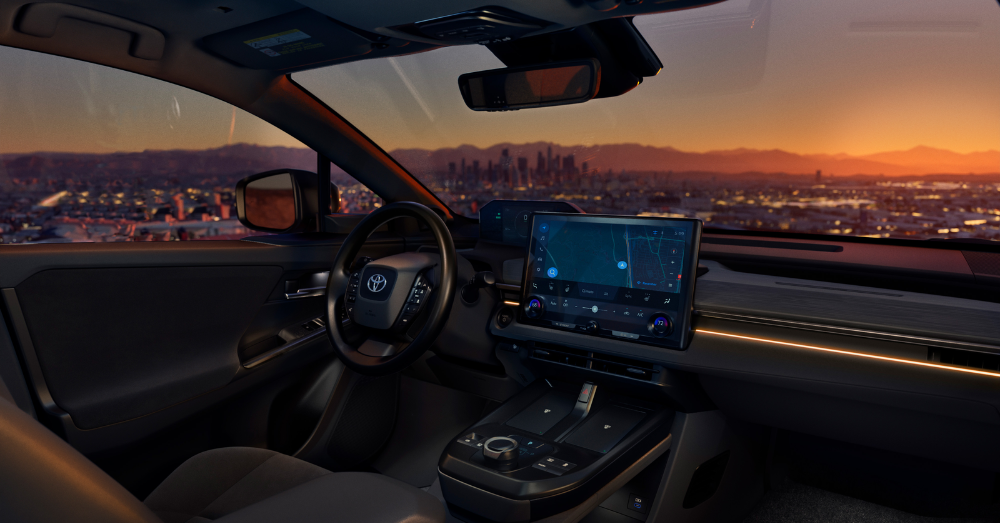
Inside is where things get really different. Gone are the cheap plastics and dated tech. You get a huge 14-inch touchscreen sitting front and center, with a digital gauge cluster tucked deep into the dashboard. Base SE trim comes with fabric seats and SofTex (Toyota’s synthetic leather) bolsters, while the XSE steps up to full SofTex with synthetic suede accents. Both trims include heated front seats and a heated steering wheel, which is nice to see as standard equipment rather than buried in option packages.
Performance That Actually Delivers
Here’s where things get fun. Two electric motors (one up front, one in back) team up to produce 338 horsepower and standard all-wheel drive. That five-second 0-60 time puts it in muscle car territory. You’re talking some serious speed here, and that instant torque from electric motors means the power hits immediately when you step on it.
A 74.7 kWh battery pack lives in the floor, which helps keep the center of gravity low and should improve handling. Toyota estimates you’ll get 290 miles per charge, which puts it right in the mix with other compact electric SUVs. That’s enough for most people’s daily driving plus weekend trips without constantly worrying about finding a charger.
Speaking of charging, the C-HR comes with a NACS port, which means you can plug into Tesla’s Supercharger network along with other DC fast chargers. Under ideal conditions, you can go from 10% to 80% battery in about 30 minutes. Built-in battery preconditioning warms things up when you’re heading to a charger, which helps speed up the charging process. For home charging, the onboard 11 kW AC charger means overnight top-ups should be no problem.
Tech Features Worth Talking About
Toyota’s been playing catch-up on the tech front for years, but they’re finally getting it right. That 14-inch touchscreen houses the Toyota Audio Multimedia system with wireless Apple CarPlay and Android Auto. You can also link your Apple Music or Amazon Music accounts directly through Integrated Streaming, so you don’t have to fumble with your phone.
A standard six-speaker audio system is fine, but the optional nine-speaker JBL setup with an 800-watt amplifier and dedicated subwoofer is the way to go if you care about sound quality. Dual wireless charging pads mean you and your passenger can both keep phones topped up without cables everywhere.
Stepping up to the XSE trim adds some nice upgrades like a 360-degree camera system (super helpful for parking), a digital rearview mirror, and lane-change assist. There’s also Traffic Jam Assist on the XSE, which combines adaptive cruise and lane keeping to reduce fatigue when you’re stuck in stop-and-go traffic.
Safety Comes Standard
Toyota Safety Sense 3.0 is standard across the board, which means you get automatic emergency braking with pedestrian detection, lane keeping assist, adaptive cruise control, blind spot monitoring, rear cross-traffic alert, and automatic high beams. There’s also Toyota’s Proactive Driving Assist, though some drivers find it a bit too eager to intervene.
One feature that stands out is the safe exit assist system. It monitors for passing vehicles before letting passengers open the doors, which could prevent accidents in busy parking lots or on city streets. The five-year trial for connected safety services includes an SOS button for emergencies, automatic crash notification, and a stolen vehicle locator.
How It Stacks Up Against Competitors
Electric compact SUV competition is getting crowded. Chevrolet’s Equinox EV starts around $35,000 and offers up to 319 miles of range. Hyundai’s Kona Electric delivers 261 miles for about $33,000. Kia’s Niro EV gets 253 miles and pricing similar to the Kona. Volvo’s EX30 is a bit pricier but offers European styling and build quality.
What sets the C-HR apart from competitors is that combination of standard all-wheel drive, quick acceleration, and Toyota’s reputation for building vehicles that last. Plus, that bold styling either grabs you or it doesn’t. You won’t mistake it for anything else on the road, which matters if you don’t want to look like everyone else in the school pickup line.
Should You Wait For It
Fall 2026 arrival means you’ve got some time to think about it. That’s actually good news because it gives Toyota time to work out any bugs and for early reviews to come in. Plus, the electric vehicle market keeps evolving, so waiting might mean better charging infrastructure and potentially better deals.
If you’re coming from the old C-HR, this new version fixes basically every complaint. If you’re shopping for your first electric vehicle, the C-HR offers a good mix of style, performance, and range without making you learn a completely new brand. And if you’re looking at other compact electric SUVs, that quick acceleration and standard AWD might be enough to sway you, especially if you live somewhere with actual winter weather.
Expected pricing between $38,000 and $45,000 puts it in competitive territory. Base SE trim should offer plenty of features for most buyers, while the XSE adds some nice-to-haves like better cameras and fancier seats. Toyota hasn’t released final pricing yet, so there’s a chance these numbers could shift either direction.
Test Drive the Electric Future at Toyota of Madison
When the 2026 Toyota C-HR arrives, we’ll have it ready for you to experience at Toyota of Madison. Being able to feel that instant electric acceleration and see the tech features in person makes a huge difference compared to just reading specs online. We’re located at 258 Clifty Drive in Madison, Indiana, and our team has been helping customers navigate the shift to electric vehicles with straightforward answers and real-world insights.
As part of the Gates Auto Family since 1915, we’ve seen the automotive world change quite a bit over the decades. Electric vehicles represent the biggest shift we’ve experienced, and we make it our job to help you understand what it means for your daily driving. Our Toyota-trained technicians are already getting up to speed on EV maintenance and service, so you’ll have expert support long after you drive home. Give us a call at (812) 273-3135 or stop by to learn more about the C-HR and other electrified Toyota models coming your way.
Connect with us

